Why Optical Computing Is Finally Ready for Prime Time
 R. Kessler
Why Optical Computing Is Finally Ready for Prime Time
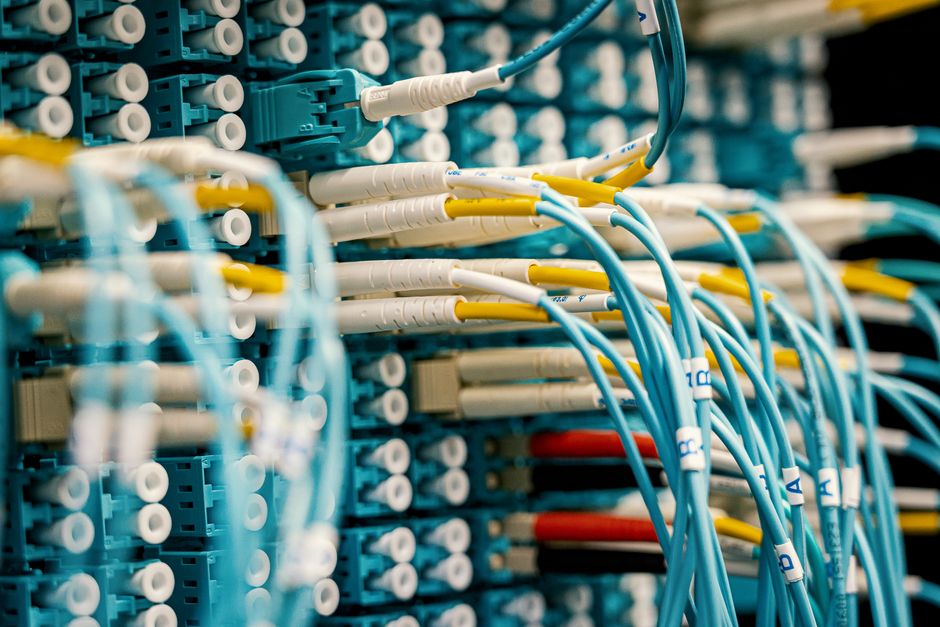
Electrons are hitting a wall. After decades of shrinking transistors and cramming more silicon into smaller spaces, the physics of electrical computing are bumping up against hard limits. Heat dissipation, signal interference, and the speed of light through copper traces are choking performance just when AI workloads demand exponentially more compute.
Photons don't have these problems.
Optical computing, processing information with light instead of electricity, has been the "next big thing" for thirty years. But three recent breakthroughs have moved photonic processors from lab curiosities to production-ready hardware that defense contractors and hyperscale data centers are quietly deploying.
The Three Breakthroughs That Changed Everything
First: manufacturing precision. Silicon photonics foundries can now fabricate optical waveguides with nanometer-level accuracy. This matters because light is finicky, tiny imperfections that wouldn't faze an electron will scatter a photon beam into uselessness. Intel's recent $700M investment in photonic manufacturing wasn't charity; they can finally build optical chips that work reliably at scale.
Second breakthrough? Materials science solved the modulator problem. Converting electrical signals to optical ones (and back) used to require exotic compounds that were expensive, fragile, and slow. New electro-optic materials based on lithium niobate thin films can flip between optical states in femtoseconds while running on milliwatts of power.
Third: software toolchains exist now. You can't just port CUDA kernels to photonic hardware, the compute model is fundamentally different. But companies like Xanadu and PsiQuantum have built compilers that can map neural network operations onto optical processing units without requiring PhD-level expertise in photonics.
graph TD
    A[Electrical Input] --> B[Electro-Optic Modulator]
    B --> C[Silicon Photonic Waveguides]
    C --> D[Optical Matrix Multiplication]
    D --> E[Photodetector Array]
    E --> F[Electrical Output]

    G[Control Logic] --> B
    G --> D
Why Defense Applications Come First
Military systems have different priorities than consumer electronics. Instead of optimizing for cost per unit, defense contractors care about performance per watt and resilience to electromagnetic interference.
Photonic processors excel at both. Light-based computation generates minimal heat, critical for compact aircraft or satellite systems where thermal management is a design constraint. And optical signals don't create the electromagnetic signatures that make electronic systems detectable to enemy sensors.
Lockheed Martin's recent contract for "next-generation signal processing" reportedly includes photonic chips for radar applications. The details remain classified, but optical computing's natural ability to process wide-bandwidth signals in parallel makes it ideal for electronic warfare and communications intelligence.
The AI Connection
Neural networks spend most of their time doing matrix multiplication, exactly what optical computers do best. Light can perform many mathematical operations simultaneously through interference patterns and wavelength division multiplexing.
Here's the key insight: while electrical processors get faster by doing individual operations quicker, optical processors get faster by doing more operations in parallel. Matrix multiplication scales beautifully with this approach.
Lightmatter, one of the leading photonic AI chip companies, claims their processors can train large language models 10x faster than GPUs while using 90% less energy. Those numbers are still being validated in real deployments, but early results from beta customers suggest the performance claims aren't marketing fluff.
What This Means for Hardware Teams
Optical computing won't replace every processor. CPUs will remain electrical for the foreseeable future, photonic chips aren't good at the branchy, conditional logic that defines general-purpose computing.
But for specific workloads, AI inference, signal processing, scientific simulation, photonics offers a genuine step-function improvement. Hardware teams working on compute-intensive applications should start evaluating optical solutions now, before the technology becomes mainstream and competition for foundry capacity heats up.
The transition will happen faster than most people expect. Just like neural networks went from academic curiosity to production workhorse in five years, optical computing is about to make the same leap.
Electrons served us well for seventy years. But photons are taking over.
Get Bits Atoms Brains in your inbox
New posts delivered directly. No spam.
No spam. Unsubscribe anytime.