The Spectrum Is Crowded and the Military Has a Signal Intelligence Problem
 R. Kessler
Spend any time around military radio operators and they'll tell you the same thing: the spectrum is a mess. What used to be a manageable set of frequency allocations has become a contested, congested, and increasingly contested-again operating environment where the signal you need is buried under the signals you don't.
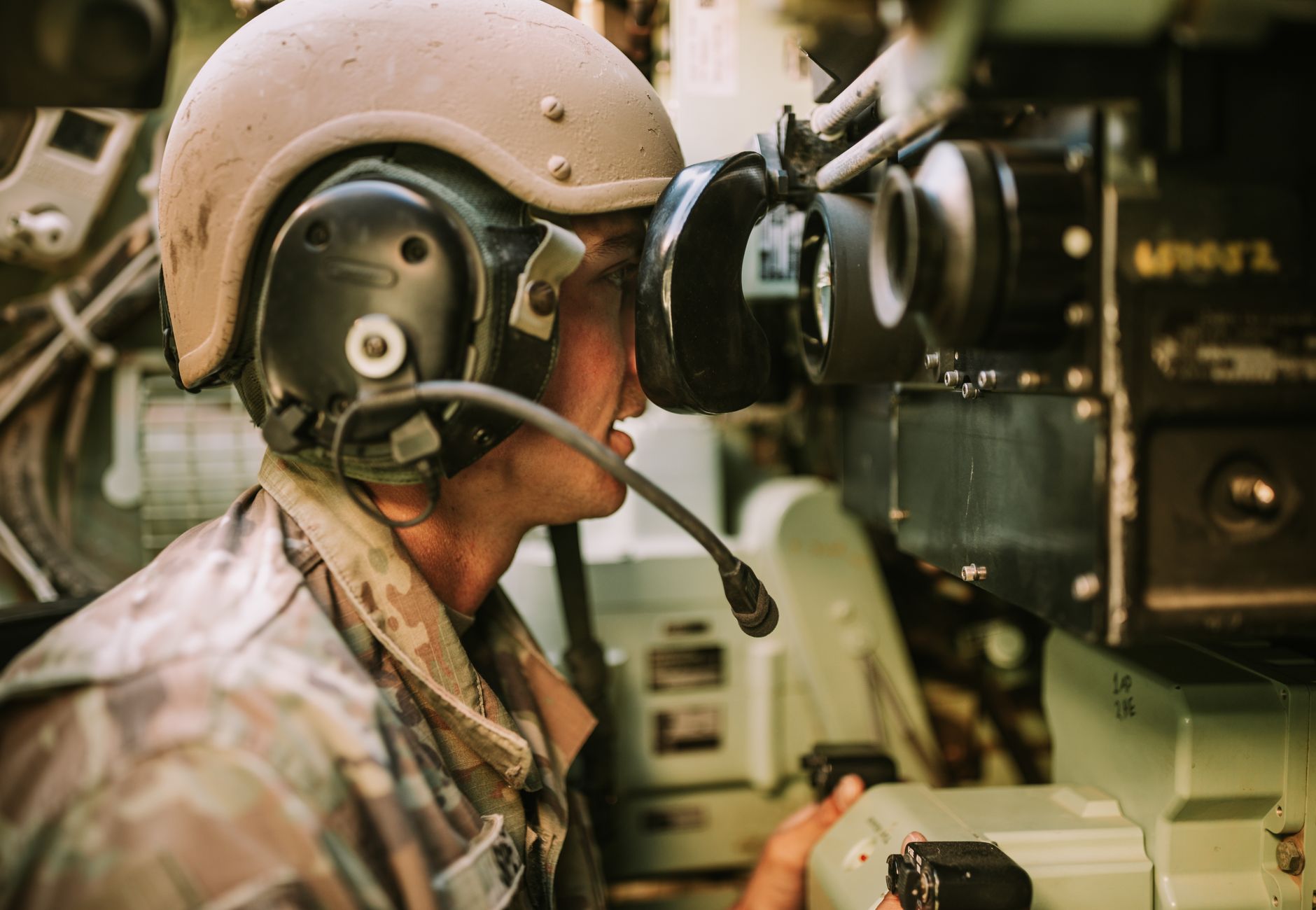 Photo by Art Guzman on Pexels.
This isn't a new observation. What's new is the scale of the problem and the inadequacy of the old solutions.
How We Got Here
For decades, spectrum management worked through allocation tables. The military got its bands, commercial operators got theirs, and everyone mostly stayed in their lanes. Electronic warfare meant jamming known frequencies or exploiting known vulnerabilities in adversary communications. Predictable enough that you could build dedicated hardware around it.
Two things broke that model simultaneously.
First, the proliferation of commercial wireless technology: LTE, 5G, satellite broadband (Starlink alone is putting tens of thousands of emitters into low Earth orbit), and an explosion of IoT devices operating in bands that were once quiet enough to rely on. Every contested urban environment now radiates. Separating a valid military signal from that background noise requires processing power and algorithmic sophistication that most legacy receivers weren't designed to deliver.
Second, adversary investment in electronic warfare has caught up fast. China's PLA Strategic Support Force and Russia's electronic warfare units have both made deliberate, well-funded pushes into spectrum denial. They're not just jamming; they're spoofing, they're doing wideband interference, and they're using machine-learning-assisted systems to adapt faster than a human operator can respond.
The combination of those two pressures means that passive spectrum management is finished as a strategy.
Cognitive Radio Is the Only Real Answer
The concept has been around since the late 1990s, courtesy of Joseph Mitola's work at the Royal Institute of Technology. The idea: a radio that can sense its electromagnetic environment, reason about what it observes, and reconfigure its own transmission parameters in real time.
What took so long? Hardware. Running inference on a wideband RF signal in real time demands serious compute at very low latency. The early software-defined radio implementations could handle the flexibility in theory; they couldn't handle the throughput in practice.
That's changing now, specifically because of two converging developments. FPGAs with embedded AI accelerator blocks (Xilinx's Versal series being the obvious example) can run neural network inference directly in the signal processing pipeline without routing data off-chip to a separate processor. And wideband RF front ends have improved enough that a single receiver can sample multiple gigahertz of spectrum simultaneously rather than requiring separate hardware for each band of interest.
The result: a radio that can classify interference, identify open spectrum holes, replan its waveform, and retransmit on a new frequency in milliseconds. Not seconds. Milliseconds.
graph TD
    A[Wideband RF Sensor] --> B{Spectrum Analyzer}
    B --> C[Interference Classifier]
    B --> D[Signal Extractor]
    C --> E{Policy Engine}
    D --> E
    E --> F[Waveform Planner]
    F --> G[Reconfigured Transmitter]
The Signal Intelligence Side
Cognitive radio solves the communications problem. The signal intelligence problem is adjacent but distinct: how do you characterize and attribute emitters in a congested environment when adversaries are themselves using frequency-hopping, spread-spectrum, and low-probability-of-intercept waveforms?
Modern SIGINT is increasingly a machine learning problem. Specific Emitter Identification (SEI) techniques can fingerprint individual transmitters by their RF imperfections: minute variations in phase noise, power ramp-up curves, and modulation nonlinearities that are essentially unique to a given piece of hardware. Training models on those signatures and running inference at the edge, on the collection platform itself, is a meaningful capability leap over the old model of collecting everything and processing it back at a ground station.
The catch is training data. You need labeled examples of adversary emitters to build reliable classifiers. That's a collection and curation problem as much as a machine learning one, and it's driving renewed interest in intelligence-sharing frameworks between Five Eyes partners and allies who operate in different theaters.
What the Pentagon Is Actually Doing
DARPA's Shared Spectrum Access for Radar and Communications (SSPARC) program has been working on this for years. The more recent RadioHound sensor network concept, developed at Carnegie Mellon, is building toward distributed spectrum sensing where many low-cost nodes map the RF environment collaboratively rather than relying on single high-value collection assets.
The Air Force Research Laboratory has been explicit about wanting AI-driven electronic warfare capabilities that can operate faster than human decision loops. The F-35's AN/ASQ-239 system already does some of this, but the integration between communications, electronic warfare, and SIGINT on a single cognitive platform is still largely aspirational at the program-of-record level.
The gap between what's technically achievable and what's been fielded remains wide. Closing it is less a research problem now and more an acquisition and integration problem. Which, if you know defense procurement, means it's the harder problem.
Get Bits Atoms Brains in your inbox
New posts delivered directly. No spam.
No spam. Unsubscribe anytime.