The Mil-Spec Connector Problem Is Actually a Signal Integrity Problem
 R. Kessler
Connectors are the most overlooked components in defense electronics. Nobody builds a program around them. Nobody writes white papers about them. They show up in the BOM as line items, get specified by MIL-DTL number, and then everyone moves on to arguing about the processor or the FPGA.
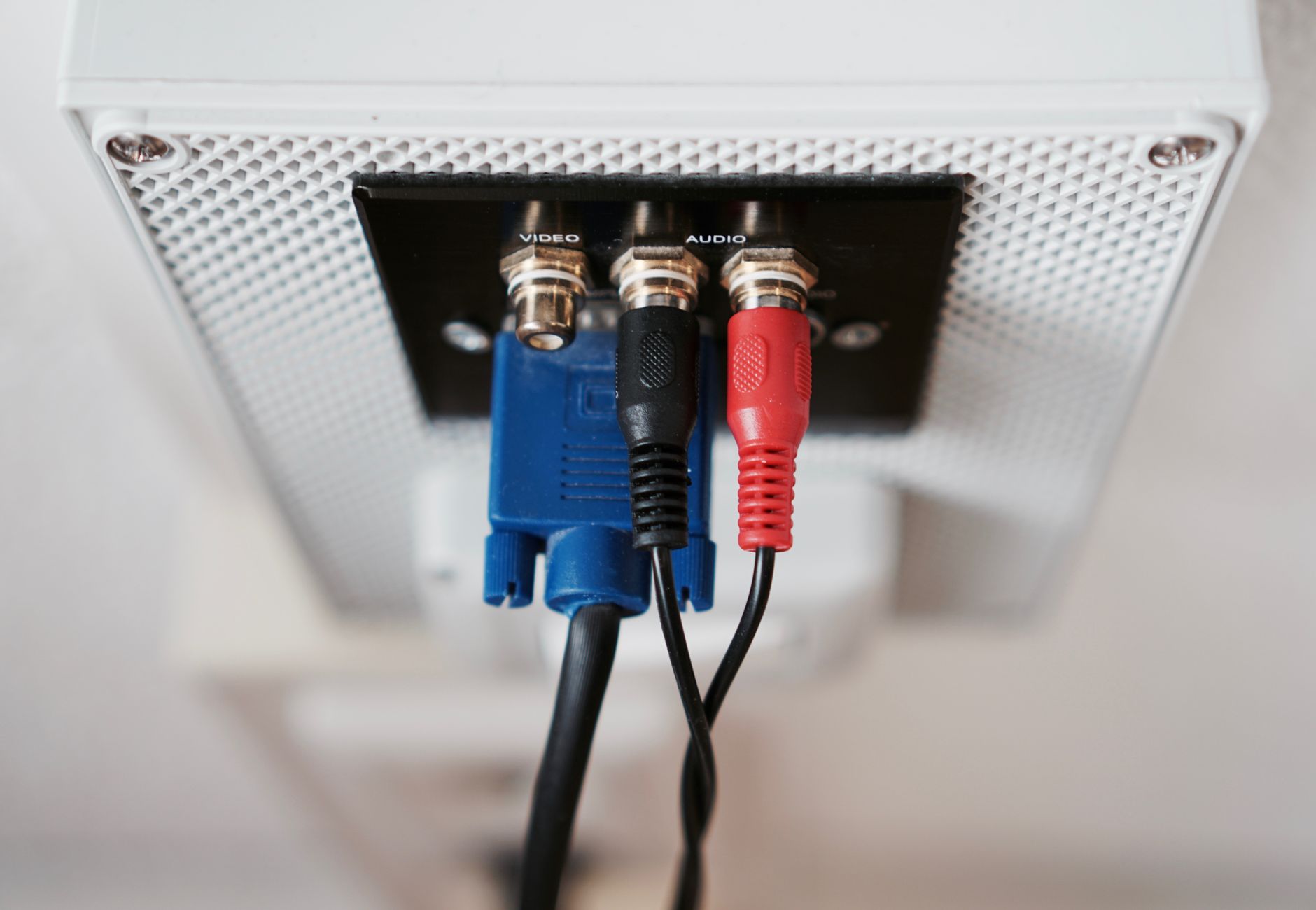 Photo by
 That oversight is becoming expensive.
The problem is straightforward once you see it: modern defense systems are pushing data rates that the connector ecosystem was never designed to handle. A ruggedized circular connector rated to MIL-DTL-38999 performs beautifully at DC and low frequencies. Get to 10 Gbps and above, and you are fighting physics. Impedance mismatches, return loss, crosstalk between adjacent contacts, dielectric absorption in the sealing compounds, all of it adds up. By the time you account for the connector, the backshell, the overmold, and the cable, the channel budget is gone before the signal reaches the board.
This matters because the data moving through these connectors is no longer telemetry trickle. Sensor fusion architectures on modern platforms aggregate video feeds, radar returns, EW data, and communications into single compute nodes. That requires moving tens of gigabits per second across bulkhead connections in environments that can swing from -55°C to 125°C, withstand vibration profiles that would destroy commercial hardware, and maintain hermeticity under pressure differentials that would collapse a commercial enclosure.
Commercial high-speed connectors have solved parts of this problem. PCIe Gen5 backplanes, QSFP-DD cages, high-density board-to-board connectors, all of these handle 112 Gbps PAM4 signals with careful impedance control. But they assume a benign environment. Tin-plated contacts oxidize. Unsealed housings let moisture in. Plastic bodies degrade under radiation. None of that is acceptable on a deployed platform.
The signal integrity community has known how to characterize these problems for decades. S-parameters, time-domain reflectometry, eye diagrams, the tools exist. What's new is the pressure to apply them rigorously to ruggedized connector designs that have historically been spec'd by contact resistance and insertion force, not by insertion loss at 20 GHz.
A handful of companies are working in this gap. Amphenol, Radiall, and LEMO have all produced high-speed variants of their ruggedized lines specifically targeting multi-gigabit applications. ODU's MEDI-SNAP derivatives have been adapted for high-frequency use in some airborne programs. These are not catalog parts. They get designed into programs early, simulated in full-wave EM solvers, and validated against specific cable assemblies. The connector and the cable get characterized together as a channel, not separately as components.
Here is where it gets interesting from a systems perspective.
graph TD
    A[Sensor Node] --> B(Ruggedized Connector)
    B --> C[Cable Assembly]
    C --> D(Bulkhead Feed-Through)
    D --> E[Backplane or Compute]
    B --> F{Signal Integrity Validation}
    F --> G[S-Parameter Simulation]
    F --> H[TDR / Eye Diagram Test]
The validation loop in that diagram used to happen late in development, usually during EMI testing when the system was nearly locked. Teams would discover that a connector choice made two years earlier was killing their eye diagram, and the fix was ugly: reroute the cable, add equalization, or accept a derated data rate. None of those are cheap options on a platform that is already in qualification.
Best-practice programs now treat the connector as a transmission line element from day one. That means running 3D EM simulations (Ansys HFSS or CST Studio are the standard tools) on the connector geometry before hardware exists. It means specifying connectors by their S21 and S11 curves at the target data rate, not just by MIL spec number. And it means buying or building channel simulation models from the connector vendor, something most MIL-spec suppliers were not set up to provide until recently.
The defense primes are pushing this requirement down into their connector supply chains now. If you want to be on the approved vendor list for a next-generation platform, you need to supply a IBIS-AMI or Touchstone model, not just a datasheet. That is a meaningful capability shift for companies that have spent decades differentiating on plating chemistry and bayonet coupling torque.
None of this is glamorous. Connector signal integrity will never headline a defense tech conference. But when the sensor fusion node on a next-generation platform fails to hit its latency spec, the investigation often ends at a connector. Getting ahead of that, treating interconnects as RF components rather than mechanical fasteners, is one of those unsexy engineering disciplines that separates programs that ship from programs that slide.
The physics was always there. The data rates just finally caught up to it.
Get Bits Atoms Brains in your inbox
New posts delivered directly. No spam.
No spam. Unsubscribe anytime.