The Electronic Warfare Frequency Problem Is Actually a DSP Problem
 R. Kessler
Electronic warfare has a reputation problem. Ask most people what it involves and they'll describe jamming, spoofing, maybe a scene from a Tom Clancy novel. The reality is considerably more unglamorous: it's a race to process more of the electromagnetic spectrum, faster, with lower latency than the adversary. And right now, that race is being lost at the digital signal processing layer.
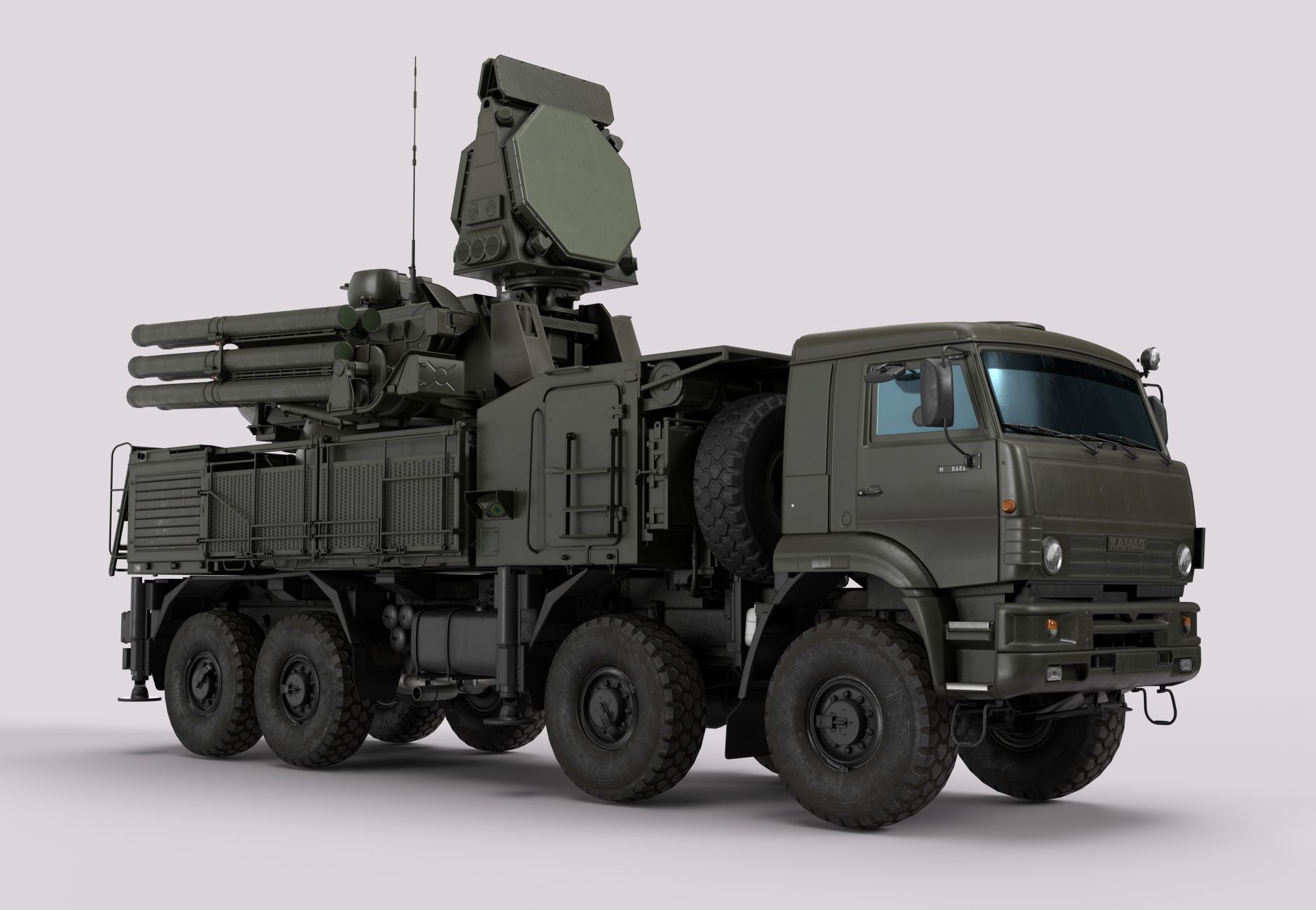 Photo by Sergey Koznov on Pexels.
Here's the specific problem. Modern radars and communications systems hop frequencies in microseconds. To counter them, an EW system needs to detect the signal, classify it, decide on a response, and generate a countermeasure before the target has already moved on. That entire loop, detection to emission, needs to close in under a microsecond in many threat scenarios. Current programmable DSP hardware struggles to hit that number without architectural compromises that sacrifice flexibility.
Flexibility matters enormously in this domain. A jammer hardwired to defeat one waveform is obsolete the moment the adversary updates their signal library. Software-defined EW systems promise the ability to push new waveforms and countermeasure algorithms over the air, without returning hardware to a depot. But software-defined means there's a processor in the loop, and processors introduce latency.
The tension sits squarely between reprogrammability and reaction time.
FPGAs have been the standard answer for years, and they're genuinely good at this. A well-designed FPGA pipeline can execute signal detection and response in tens of nanoseconds. The problem: FPGA designs are complex to write, harder to verify, and the logic changes required to update a countermeasure can take months of engineering time. That's not a software update cadence. That's closer to a hardware revision cycle.
RF System-on-Chip devices from companies like Analog Devices and Xilinx (now AMD) have pushed the boundary somewhat. The RFSoC series integrates multi-gigahertz ADCs and DACs directly with programmable logic, eliminating the conversion bottleneck that used to bleed latency between analog front ends and digital processing. Some defense contractors are building EW payloads around these parts precisely because they cut the signal chain from six components to two. That matters when you're mounting hardware to a wing pylon with strict size, weight, and power budgets.
But even RFSoC has limits. Processing bandwidth is finite. When you need to cover multiple frequency bands simultaneously, with independent countermeasures running in parallel, you're stacking DSP workloads that the chip wasn't necessarily dimensioned for. Tiling multiple RFSoCs together introduces synchronization problems. Getting coherent phase relationships across separate chips, at millimeter-wave frequencies, is a non-trivial RF engineering challenge that doesn't have a clean software solution.
What's emerging as a potential path forward is heterogeneous DSP: purpose-built AI inference accelerators sitting alongside traditional FPGA fabric, with the FPGA handling deterministic, low-latency signal detection while the neural accelerator handles classification and countermeasure selection. The idea is to offload the pattern-recognition workload to hardware that's actually good at it, without putting AI inference in the latency-critical path.
graph TD
    A[/RF Front End/] --> B[ADC - RFSoC]
    B --> C{FPGA Fabric}
    C --> D[Signal Detection]
    C --> E[Neural Accelerator]
    D --> F[Countermeasure Trigger]
    E --> F
    F --> G[/DAC - Emission/]
This architecture has shown up in DARPA's Adaptive RF Technology program and in several Navy EW upgrade efforts. The challenge is integration: making the FPGA and the AI accelerator exchange data at a rate that doesn't reintroduce the latency you just engineered out of the analog chain. Memory bandwidth between those two compute elements is often where the actual bottleneck lives, not the compute itself.
There's also a verification problem that gets underplayed. Defense EW systems need to be certified before deployment. An AI model sitting in the countermeasure selection loop introduces non-deterministic behavior that traditional DO-254 and MIL-STD hardware qualification processes aren't built to handle. The hardware may work. Getting it approved is a separate multi-year problem.
None of this is unsolvable. The trajectory of RFSoC integration density, combined with increasingly mature neuromorphic inference hardware, points toward systems that can close the detection-to-emission loop with both speed and flexibility. But the defense acquisition community needs to stop treating EW upgrades as a software procurement and start funding them as semiconductor development. The frequency problem is real. The solution lives on silicon.
Get Bits Atoms Brains in your inbox
New posts delivered directly. No spam.
No spam. Unsubscribe anytime.