Why Hypersonic Weapons Are Really a Materials Science Problem
 R. Kessler
Hypersonics gets framed as a propulsion story. Scramjets, boost-glide vehicles, sustained Mach 10 cruise. The engineering press loves the speed numbers. What gets buried is the part that's actually hard: keeping the vehicle from destroying itself before it reaches the target.
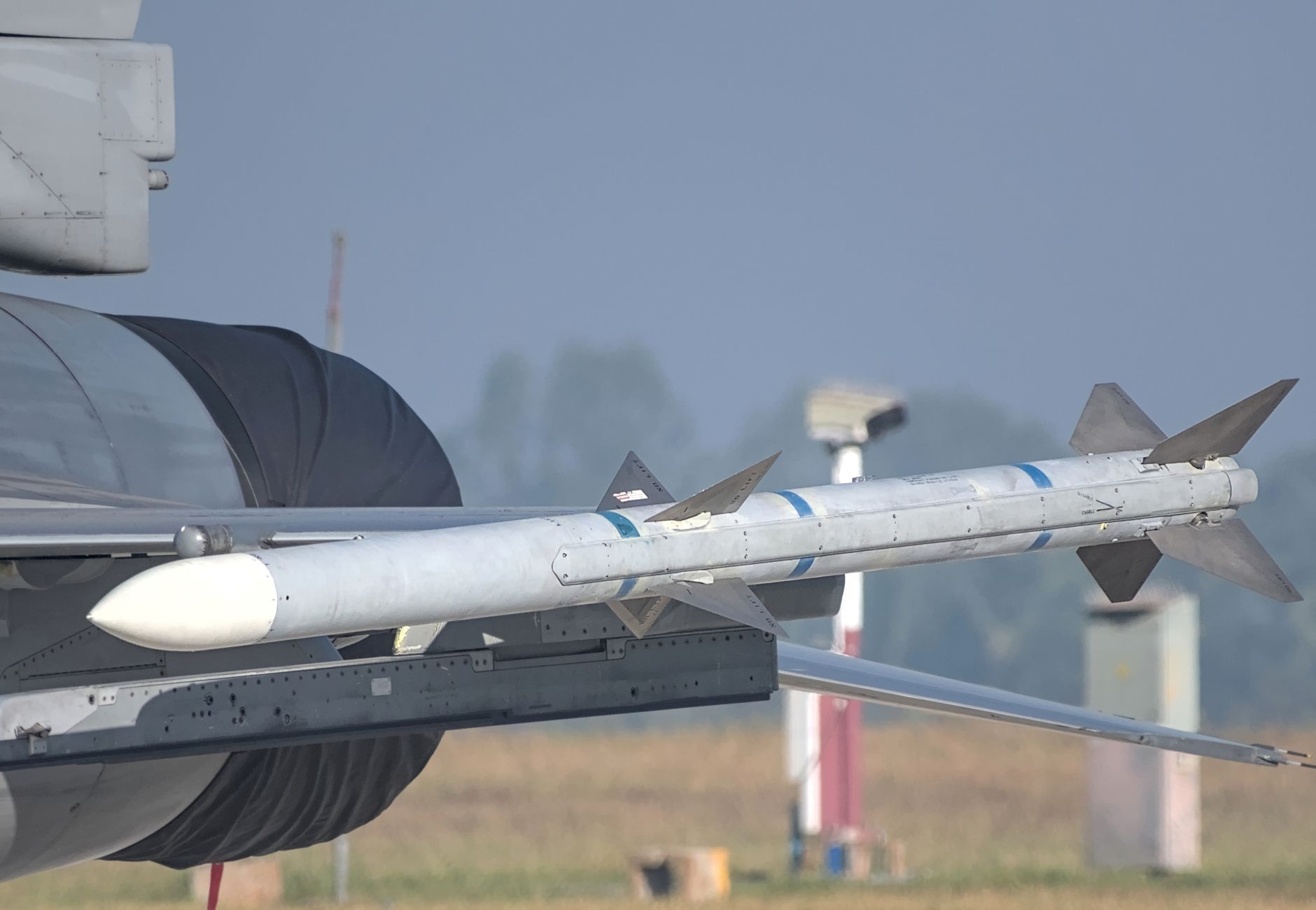 Photo by Aseem Borkar on Pexels.
At sustained hypersonic velocities, aerodynamic heating doesn't just warm the airframe. It produces plasma. Stagnation temperatures at Mach 10 can exceed 3,000°C at the nose and leading edges. For reference, tungsten melts at 3,422°C. You are operating inside a margin that leaves almost no room for error, and that margin shrinks the longer the vehicle flies.
So the question becomes: what do you build it out of?
The current answer, for most programs, is ultra-high temperature ceramics. UHTCs. Materials like hafnium diboride (HfB₂), zirconium diboride (ZrB₂), and their composites with silicon carbide can survive temperatures above 3,000°C while maintaining structural integrity. They sound like a clean solution. They are not. Ceramics are brittle. They resist heat beautifully and fracture under mechanical stress unpredictably. A hypersonic glide vehicle doesn't just experience heat; it experiences oscillating aerodynamic loads, acoustic fatigue, and oxidizing plasma chemistries that attack grain boundaries at the microstructural level.
The failure modes are exotic. Oxygen diffuses into UHTC composites along grain boundaries faster at high temperatures, forming oxide layers that can spall off mid-flight. That changes the aerodynamic profile. Which changes heating distribution. Which accelerates further degradation in regions that weren't originally at risk. The thermal-structural coupling problem is genuinely vicious.
Carbon-carbon composites offer a different tradeoff. Exceptional strength-to-weight ratio at temperature, good fracture toughness compared to ceramics, proven in reentry vehicle applications since the 1970s. The weakness is oxidation. Carbon burns. Above about 400°C in an oxidizing environment, unprotected C-C composites degrade rapidly. Protective coatings (typically silicon carbide or hafnium carbide) buy time but add weight and introduce their own thermal expansion mismatch problems. Coatings crack. When they crack, the substrate is exposed.
This is where active thermal protection becomes interesting. Some programs are looking at transpiration cooling: pumping a coolant fluid through a porous leading edge so it ablates and creates a protective boundary layer. It works. It also consumes mass budget, requires plumbing that can survive the same environment it's protecting against, and adds complexity to a vehicle that needs to be manufacturable at scale.
Here's a diagram of the material tradeoff space most hypersonic TPS programs are navigating:
graph TD
    A[Hypersonic TPS Requirement] --> B(UHTC Ceramics)
    A --> C(Carbon-Carbon Composites)
    A --> D(Active Transpiration Cooling)
    B --> E{Brittle Fracture Risk}
    C --> F{Oxidation Without Coating}
    D --> G{Mass and Plumbing Penalty}
    E --> H[UHTC-SiC Hybrid Systems]
    F --> H
    G --> H
Almost every serious program converges on hybrid systems: UHTC composites reinforced with ceramic fibers to improve toughness, with selective coatings at the highest-flux regions, and sometimes ablative backup material for worst-case trajectories. The design space is narrow and the testing is brutal.
Testing is its own problem. You cannot fully replicate hypersonic flight environments in ground facilities. Arc-jet tunnels get you close on heating rates but don't reproduce the pressure oscillations and acoustic loading simultaneously. Shock tunnels give you the right Mach number for milliseconds, not minutes. Every program runs ground tests that are valid within their envelope and then has to make engineering judgments about what happens outside it. The U.S. has spent heavily on expanding hypersonic ground test infrastructure, partly because the gap between what you can test and what actually flies has caused expensive surprises.
The Pentagon's hypersonic programs: ARRW, LRHW, CPS, and the DARPA Glide Breaker work on the intercept side, all run into this same wall at some point. So do Chinese DF-ZF and Russian Avangard development efforts, based on what's publicly visible in the technical literature. Speed is politically visible. Material science is not. But material science is where programs slip schedules and where cost overruns accumulate.
Manufacturing compounds everything. UHTC components require sintering at extreme temperatures with tight process controls. Small variations in powder purity, sintering atmosphere, or cooling rate produce parts with meaningfully different mechanical properties. Scaling that from a prototype shop to a production line is a problem the defense industrial base hasn't fully solved. Right now, a small number of specialty ceramics manufacturers can produce these materials. That's a supply chain vulnerability that doesn't show up in the press releases about Mach numbers.
The speed gets the headlines. The hafnium diboride gets the program delays.
Get Bits Atoms Brains in your inbox
New posts delivered directly. No spam.
No spam. Unsubscribe anytime.