The Ballistic Missile Defense Problem Is Actually a Real-Time Signal Processing Problem
 R. Kessler
Intercepting a ballistic missile sounds like a physics problem. You track an object moving at Mach 10, compute an intercept trajectory, and put a kill vehicle in the right place at the right time. Clean, geometric, solvable.
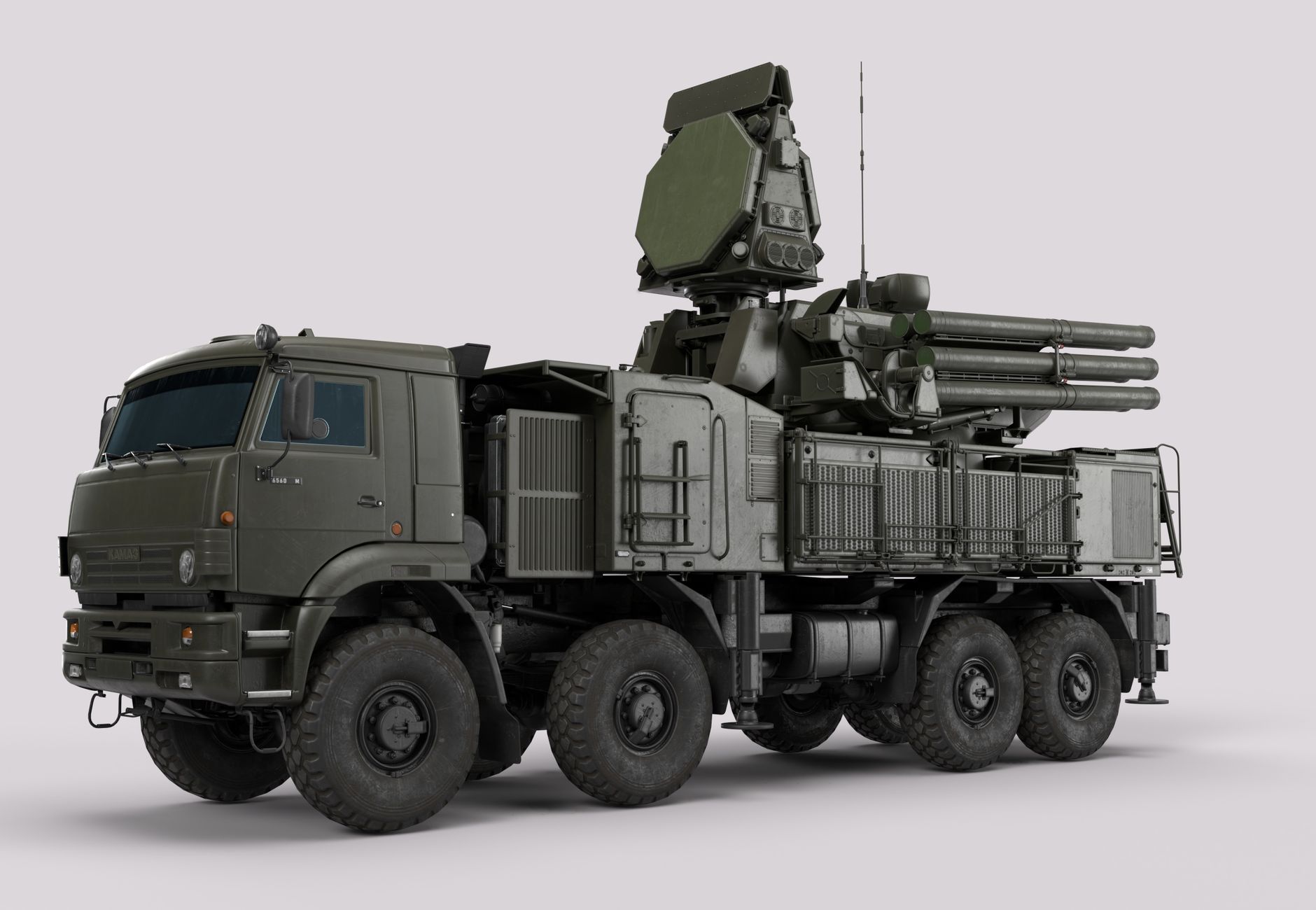 Photo by Sergey Koznov on Pexels.
Except it isn't.
What actually breaks missile defense systems isn't the math. It's the time budget. From the moment a threat detection sensor fires its first return to the moment a fire control solution needs to exist, you have somewhere between 30 and 200 milliseconds depending on the engagement geometry. Every microsecond of latency you burn in signal processing is a microsecond your kill vehicle can't course-correct. And with hypersonic glide vehicles that maneuver unpredictably during terminal phase, every microsecond matters.
This is a real-time signal processing problem. A hard one.
The Sensor Front End Is the First Bottleneck
Modern ballistic missile defense relies on phased-array radars: AN/TPY-2, THAAD's fire control radar, the upgraded early warning radars at Thule and Clear. These systems generate data volumes that would embarrass most data centers. A large phased array running pulse-Doppler waveforms at high PRF (pulse repetition frequency) can produce tens of gigabits per second of raw ADC samples before a single processing stage has touched them.
The first job is clutter rejection. Ground clutter, weather returns, chaff, electronic countermeasures, all of it has to be stripped out before track-quality data reaches the fire control system. That stripping happens in FPGAs and custom DSP ASICs sitting millimeters from the antenna feed, operating on raw IQ samples before they're even formatted into packets. The power consumption at this stage is significant; so is the thermal load. Which is why phased-array radar trailers have cooling systems that would embarrass a small server room.
Get this stage wrong, even by a few dB of sensitivity, and your detection range shrinks. Shrinking detection range compresses the already-thin time budget downstream.
Track Formation Under Uncertainty
graph TD
    A[Raw ADC Samples] --> B(Clutter Filter / Pulse Compression)
    B --> C{Detection Threshold}
    C -->|Above threshold| D[Plot Extractor]
    C -->|Below threshold| E[/Discarded/]
    D --> F(Track Initiation)
    F --> G(Track Association)
    G --> H((Fire Control Solution))
Once you have detections, you need tracks. This is where the real computational pain starts.
A single threat missile generates hundreds of radar plots per second. Each plot is a noisy, ambiguous measurement: range, Doppler, azimuth, elevation, all with uncertainty bounds. The tracker's job is to fuse these plots into a coherent track, estimating position, velocity, and acceleration state, while simultaneously rejecting false alarms from countermeasures and debris.
The workhorse algorithm here is the Kalman filter, or more precisely its nonlinear descendants: the extended Kalman filter, the unscented Kalman filter, interacting multiple model (IMM) filters that hedge across different threat motion hypotheses simultaneously. These are not computationally expensive by modern standards. Running a bank of IMM filters on a single threat costs maybe a few million floating-point operations per radar update.
The problem is scale. In a complex engagement, multiple threat objects, debris clouds, decoys, active jamming, your tracker might be maintaining hundreds of candidate tracks simultaneously, each requiring its own filter bank, each competing for the same compute budget. Track association (deciding which plot belongs to which track) is an assignment problem that scales combinatorially with the number of objects. Even with clever approximations like JPDA (joint probabilistic data association), the compute load spikes hard during complex engagements.
Defense contractors have historically solved this with dedicated signal processors: racks of DSP boards, later augmented with FPGA acceleration. The problem with that approach in 2026 is that the threat environment has changed faster than the procurement cycle. Maneuvering reentry vehicles and hypersonic glide bodies follow motion profiles the original filter designs never accounted for.
Where AI Is Being Carefully, Cautiously Inserted
The push to augment classical tracking with learned components is real. DARPA's work on adaptive radar resource management has been exploring reinforcement learning to dynamically allocate radar dwell time across competing tracks, essentially teaching the radar to pay more attention to the threats that need it most. Lockheed and Raytheon have both been quiet about their internal work here, but the patent filings tell a story.
The challenge is qualification. A Kalman filter has a closed-form mathematical description; you can prove its behavior under known conditions. A neural network doing threat classification does not offer the same guarantees. When the consequence of a misclassification is either a wasted interceptor or a missed threat, program managers want mathematical proof, not validation datasets.
So what's actually happening is a hybrid architecture: learned components handle preprocessing and anomaly flagging, classical estimators handle the state estimation that feeds fire control. The seam between those two worlds, where a neural network's output becomes a Kalman filter's input, is where the real systems integration work is happening, and where most of the classification risk lives.
The Compute Platform Is the Constraint Nobody Advertises
All of this runs on compute that has to survive shock, vibration, electromagnetic interference, and sometimes direct kinetic attack. The transition from purpose-built DSP boards to COTS-derived heterogeneous compute (combinations of FPGAs, GPUs, and high-performance embedded processors) has been ongoing for a decade, but the latency requirements for terminal-phase defense push the limits of what even hardened commercial silicon can deliver with deterministic timing guarantees.
You can have a GPU cluster that averages 5ms for a tracking update. What you cannot have, in a fire control loop, is a tracking update that occasionally takes 50ms because the scheduler decided to run garbage collection. Determinism matters more than peak throughput. That single fact explains why defense signal processing still looks archaic to anyone who has spent time in cloud computing.
The ballistic missile defense problem, properly framed, is a hard real-time distributed signal processing problem running under power and size constraints on hardware that has to work every single time. Physics sets the geometry. Compute sets the outcome.
Get Bits Atoms Brains in your inbox
New posts delivered directly. No spam.
No spam. Unsubscribe anytime.