The Undersea Cable Problem Is Actually a Compute and Sensing Problem
 R. Kessler
Roughly 95 percent of international internet traffic runs through undersea cables. Not satellites. Not wireless links. Cables on the ocean floor, many of them thinner than a garden hose, carrying the financial system, military communications, and intelligence sharing for every major alliance on earth.
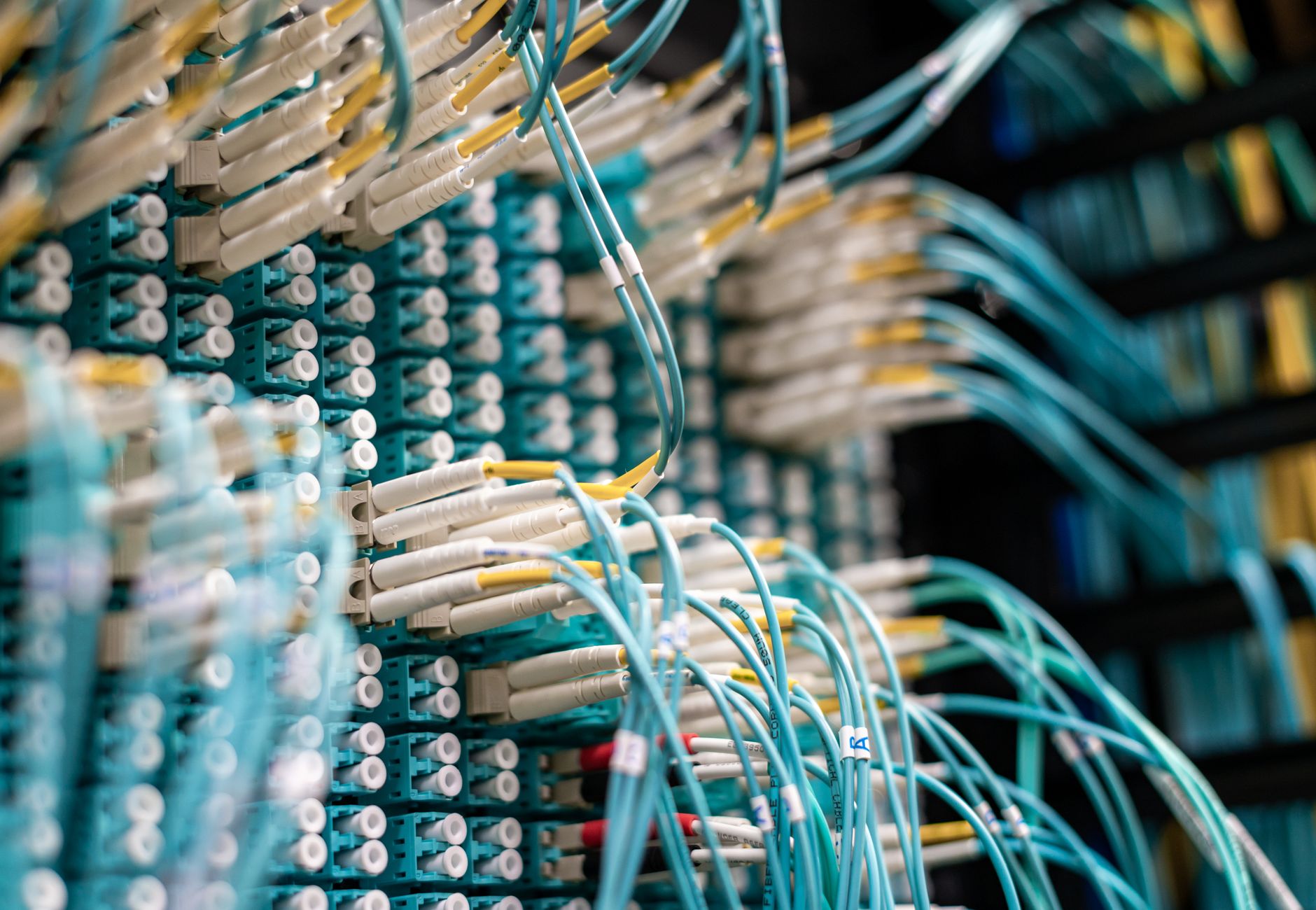 Photo by Brett Sayles on Pexels.
Sabotage incidents have been climbing. The Baltic Sea cables cut in late 2024. The Red Sea disruptions tied to Houthi activity earlier that year. NATO has standing working groups now specifically on undersea infrastructure protection. None of that is secret anymore.
What doesn't get discussed is the harder question: how do you actually protect something that spans tens of thousands of kilometers of ocean floor, often in international waters, with no persistent human presence?
The answer involves a lot of physics, a fair amount of software, and a growing amount of AI inference running in places nobody expected.
The Detection Problem Is Not Trivial
Knowing something happened to a cable is easy. You lose signal. The hard problem is knowing what happened, where, and in time to do something about it.
Existing cable systems have optical time-domain reflectometry (OTDR) built in. Send a pulse of light down the fiber, measure the reflection. The math gives you a distance to the fault. That works reasonably well for a clean break. It tells you almost nothing about slow tampering, partial bends, or pressure vessels attaching to the cable jacket.
So the detection gap is significant. And filling it requires distributed sensing across the cable span itself, not just at the landing stations.
Some newer cable systems embed sensing fibers specifically for distributed acoustic sensing (DAS). DAS treats the fiber as a microphone array. Vibrations, pressure changes, even the acoustic signature of a vessel's propeller at close range, all show up as perturbations in the backscatter signal. A single fiber can cover hundreds of kilometers. The resolution can get down to meters.
The catch: the raw data volume is enormous. A DAS system monitoring a long cable segment generates gigabytes per hour. You cannot ship that to a shore station for processing without a latency that makes the data useless for any real-time response.
Where Compute Enters the Picture
graph TD
    A[DAS Fiber Sensing] --> B(Edge Inference Node)
    B --> C{Anomaly Detected?}
    C -->|Yes| D[Alert + Metadata Uplink]
    C -->|No| E[Local Log / Discard]
    D --> F((Command Center))
The solution being pursued by several defense-adjacent programs is inference at the repeater. Undersea cables already have powered repeaters spaced roughly every 50 to 100 kilometers to boost optical signal. Those repeaters are power-constrained and thermally constrained, but they exist and they have a physical presence on the cable.
The proposal is to embed low-power inference accelerators at or near repeater housings. Run anomaly detection locally. Ship only the metadata, not the raw waveform, to shore. Something like: "Acoustic event at kilometer 847, confidence 0.91, signature consistent with ROV thruster profile."
That is a hard engineering problem. The power budgets are measured in watts, not kilowatts. The hardware has to survive 6,000 meters of depth, corrosive seawater, and a 25-year operational life with no maintenance. Radiation hardening isn't the concern here; pressure tolerance and long-term reliability are.
Several chipmakers working in the defense space have started looking at this. The compute requirements for lightweight anomaly detection are not enormous by modern standards, but the form factor and reliability envelope are unlike anything consumer or datacenter AI demands.
The Sovereignty Layer
There is a second problem sitting underneath the technical one. Most undersea cables are owned by private consortia, often including companies from multiple countries. Some routes pass through jurisdictions where military presence is politically complicated.
Defense agencies cannot simply instrument every cable they want to monitor. They have to work through operators, which means the sensing and compute systems need to be architecturally separable: the cable operator runs the fiber, the defense-aligned entity runs the inference layer, and the two systems have well-defined interfaces that don't require either party to expose more than necessary.
Confidential computing concepts are showing up in these conversations. The idea that an inference node can produce verified outputs without exposing the underlying model or raw sensor data has obvious appeal when the cable owner and the monitoring agency have different interests and different clearance levels.
Why This Matters Now
Great power competition has a geography, and a lot of that geography is underwater. Disrupting undersea cables is cheap, deniable, and strategically devastating. The asymmetry strongly favors the attacker under current conditions.
Closing that gap requires treating the cable itself as a sensor platform, treating each repeater as an edge compute node, and rethinking how sensing data flows from the ocean floor to decision-makers. That convergence of hardware constraints, inference software, and secure data handling is exactly the kind of problem defense tech is being asked to solve right now.
The ocean floor is about to get a lot more intelligent.
Get Bits Atoms Brains in your inbox
New posts delivered directly. No spam.
No spam. Unsubscribe anytime.