Why Edge AI Chips Are Eating the Data Center
 R. Kessler
The AI gold rush has everyone staring at massive GPU clusters in hyperscale data centers. Meanwhile, something more interesting is happening at the edges of our networks: intelligence is getting smaller, faster, and more distributed than anyone predicted.
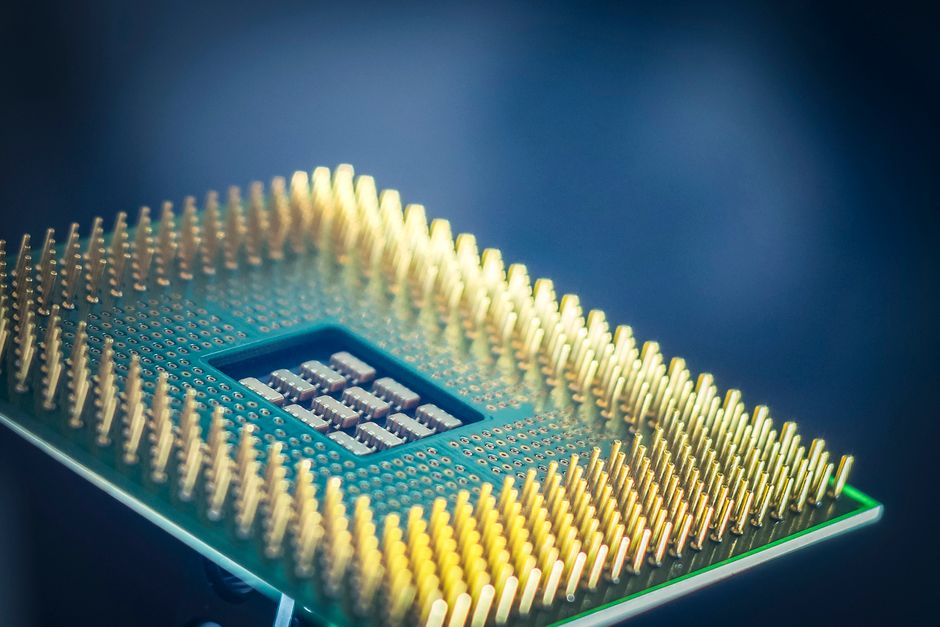
Edge AI chips aren't just miniaturized versions of data center silicon. They're purpose-built for a different reality entirely. Where cloud GPUs optimize for raw throughput, edge processors prioritize latency, power efficiency, and real-time decision making. The difference matters more than you might think.
Consider what happens when a military drone needs to identify targets in contested airspace. Cloud connectivity? Forget it. The intelligence has to live on the platform, processing sensor data and making decisions in milliseconds. Or take autonomous vehicles navigating through urban environments, every microsecond of latency between perception and action could mean the difference between safe passage and catastrophic failure.
graph LR
    A[Sensors] --> B[Edge AI Chip]
    B --> C[Local Decision]
    C --> D[Immediate Action]
    B --> E[Data Summary]
    E --> F[Cloud/Data Center]
    F --> G[Model Updates]
    G --> B
This shift toward distributed intelligence is reshaping the semiconductor industry in ways that extend far beyond traditional AI companies. Defense contractors are designing custom neural processing units for everything from missile guidance systems to battlefield communication networks. Automotive suppliers are embedding vision processors directly into camera modules. Even consumer electronics manufacturers are putting machine learning accelerators into devices we never expected to be "smart."
The technical challenges are formidable. Edge AI chips must squeeze neural network computations into power envelopes measured in watts, not kilowatts. They need to handle multiple data types simultaneously, video streams, radar signatures, lidar point clouds, audio feeds. Most importantly, they must maintain performance without constant connectivity to update models or offload computations.
Intel's recent acquisition spree in this space tells the story clearly. Their Habana Labs purchase wasn't just about competing with NVIDIA in data centers; it was about building the IP stack for distributed AI deployment. Similarly, when Qualcomm talks about their NPU roadmap, they're not thinking about chatbots, they're thinking about putting GPT-class language models into smartphones that work without internet connections.
The defense implications are staggering. Imagine swarms of autonomous drones, each carrying its own AI inference engine, coordinating missions without any centralized command structure. Or consider electronic warfare systems that can adapt their countermeasures in real-time, learning opponent tactics on the fly. These scenarios require compute power that's both powerful and portable, exactly what edge AI chips deliver.
But here's where things get really interesting: edge AI isn't just about moving existing workloads closer to sensors. It's enabling entirely new categories of applications that were impossible when intelligence lived exclusively in the cloud. Real-time language translation in secure environments. Predictive maintenance for critical infrastructure. Adaptive cybersecurity that responds to novel attacks without waiting for signature updates.
The supply chain dynamics are shifting accordingly. Traditional semiconductor foundries are adapting their process nodes for AI-specific workloads. Memory manufacturers are developing new storage solutions optimized for neural network weights. Even packaging companies are innovating around thermal management and multi-die integration to support these demanding applications.
What we're witnessing isn't just another product category emerging, it's a fundamental redistribution of computing power from centralized to distributed systems. The companies that understand this transition earliest will build the most defensible positions in the next decade of technology development.
Cloud computing taught us to centralize intelligence for efficiency and scale. Edge AI is teaching us to distribute it for speed, security, and resilience. The future belongs to systems that can do both.
Get Bits Atoms Brains in your inbox
New posts delivered directly. No spam.
No spam. Unsubscribe anytime.