Thermal Management Is the Silent Killer of Defense AI Hardware
 R. Kessler
Nobody puts thermal management on the conference keynote slide. You get the GPU cluster, the inference chip, the sensor fusion stack, and somewhere in the footnotes, someone has quietly assumed the cooling problem is solved. It isn't.
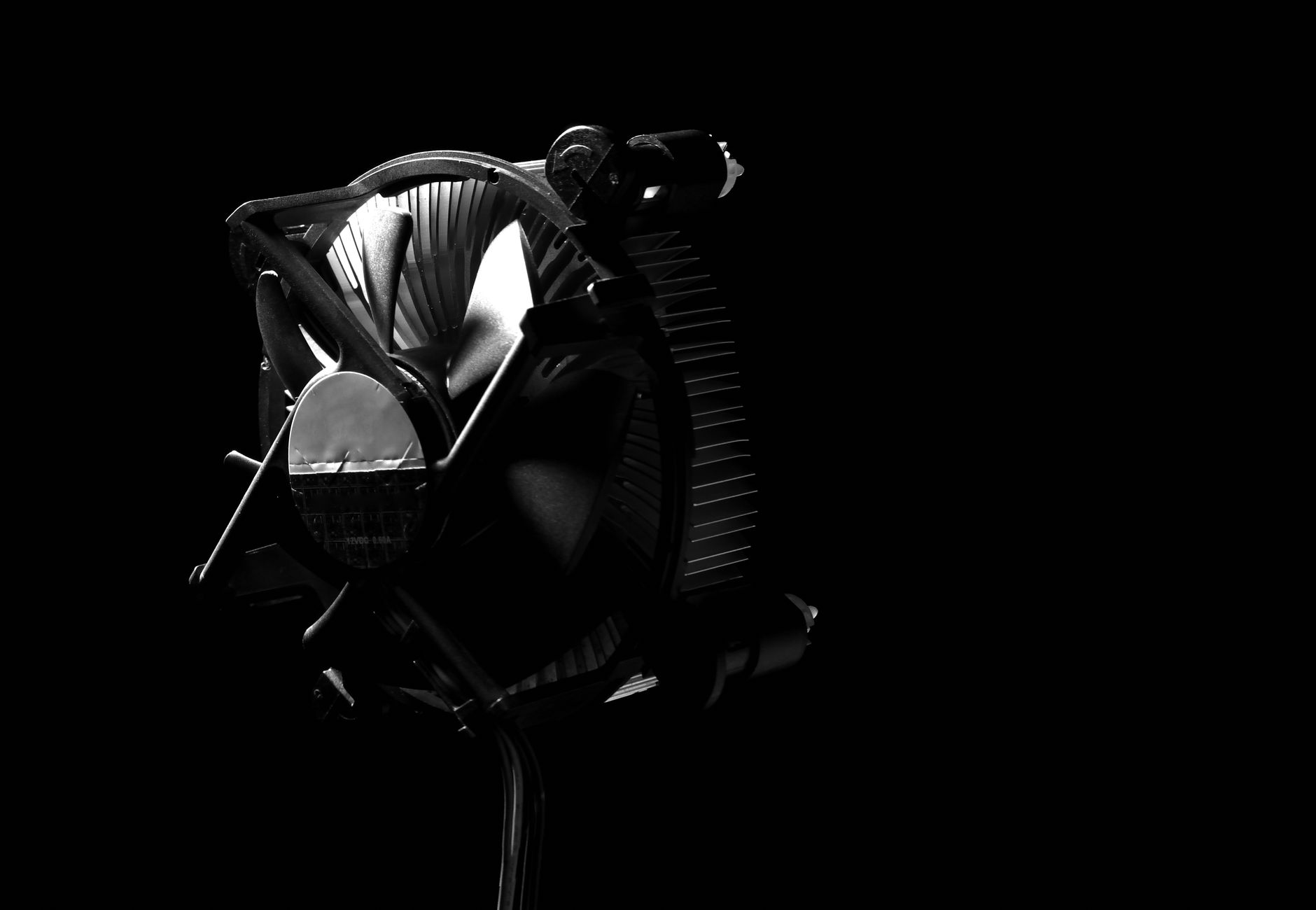 Photo by Miguel Á. Padriñán on Pexels.
Heat is quietly strangling the next generation of defense AI hardware, and the gap between what systems can theoretically compute and what they can sustain in the field is wider than most program managers want to admit.
The Physics Don't Care About Your Roadmap
Modern AI inference chips, the kind you'd want on an autonomous platform, inside a missile seeker, or aboard an ISR aircraft, are burning somewhere between 100W and 400W per chip at peak load. Stack a few of those together for a multi-modal sensor fusion task, and you're looking at a heat load that would challenge a well-ventilated data center, let alone a sealed electronics bay on a tactical vehicle running in the Mojave in August.
Air cooling, the default solution for decades, tops out around 1 kW per liter in favorable conditions. Liquid cooling gets you further, but it adds weight, plumbing, and failure modes that field maintenance crews aren't equipped to handle. Two-phase immersion cooling? Brilliant in a server farm. Completely impractical bolted to the side of a Stryker.
The real problem isn't that we lack thermal solutions. It's that we design the compute first and treat thermal as someone else's problem, usually the mechanical engineers who get the requirements last and the budget cuts first.
What Actually Happens in the Field
Here's how it plays out in practice:
graph TD
    A[Mission Requirement] --> B[Compute Spec Defined]
    B --> C[Chip / Module Selected]
    C --> D{Thermal Budget Check}
    D --> E[Thermal Limits Exceeded]
    E --> F(Clock Speed Throttled)
    F --> G[Latency Increases]
    G --> H[Mission Capability Degraded]
That throttling step is where the wheels come off. A neural network that achieves 98% target classification accuracy in a lab benchmark might drop to 91% when the SoC is thermally throttled to 60% of its rated clock, because inference latency spikes, buffers overflow, and the system starts dropping frames from the sensor feed. Nobody failed the requirements document. The system just doesn't work the way anyone intended when it's actually hot.
The F-35's thermal issues during early development are public enough to cite: the aircraft's systems generated more waste heat than the fuel-based cooling system could handle at certain operational tempos. That cost years and hundreds of millions to address. Multiply that across every new platform trying to absorb 2020s AI compute loads and you have a systemic problem, not an edge case.
What Forward-Leaning Programs Are Doing Differently
Some programs are starting to treat thermal as a first-class design variable, not an afterthought. A few approaches worth watching:
Chiplet disaggregation for thermal spreading. Instead of one monolithic die generating a concentrated hot spot, disaggregated chiplet designs spread the heat load across a larger area. DARPA's CHIPS program touched on this, and several defense primes are now exploring chiplet-based compute modules specifically because the thermal profile is more manageable, not just because of yield advantages.
Phase-change materials in conformal packaging. Embedding PCMs directly into module housings allows short bursts of high-compute activity, say, the ten seconds of peak inference during a targeting engagement, to be absorbed by the material's latent heat capacity, then slowly dissipated afterward. It's borrowed from spacecraft thermal design and it's finding new relevance in tactical compute modules.
Workload-aware thermal governors. Rather than generic DVFS (dynamic voltage and frequency scaling) that simply throttles when temps spike, newer approaches model the thermal state of the chip alongside the mission timeline and pre-emptively shift workloads. If the system knows a high-intensity compute burst is coming in 30 seconds, it can cool down ahead of time by shedding lower-priority tasks. This requires tighter integration between the OS scheduler and the thermal sensor array than most defense software stacks currently support, but it's achievable.
The Funding Gap Is Real
Here's the uncomfortable truth: thermal management doesn't win contracts. It doesn't appear in press releases. No prime contractor is going to differentiate on a vapor chamber design when they can lead with TOPS-per-watt numbers from the chip vendor's datasheet.
But the TOPS-per-watt number on the datasheet is a peak figure at junction temperature. Sustained throughput under real operational thermal load is sometimes 40–50% lower. That delta is where programs fail quietly, not at the CDR, not at the test range, but six months into fielding when operators start complaining that the system is slow.
The programs that will actually field functional AI-enabled hardware, not just demonstrate it, are the ones treating thermal as a systems engineering problem from day one. That means thermal architects in the room when compute requirements are being written, not when the chassis drawings are already locked.
Heat rises. So does the cost of ignoring it.
Get Bits Atoms Brains in your inbox
New posts delivered directly. No spam.
No spam. Unsubscribe anytime.