Software-Defined Radar Is Breaking a 70-Year Hardware Monopoly
 R. Kessler
Radar has always been a hardware problem. Since World War II, the physics of radio-frequency sensing demanded purpose-built analog chains, transmitters, receivers, mixers, filters, each tuned to a narrow mission. You built a fire-control radar or a weather radar or a synthetic aperture radar. Not all three. Not in software.
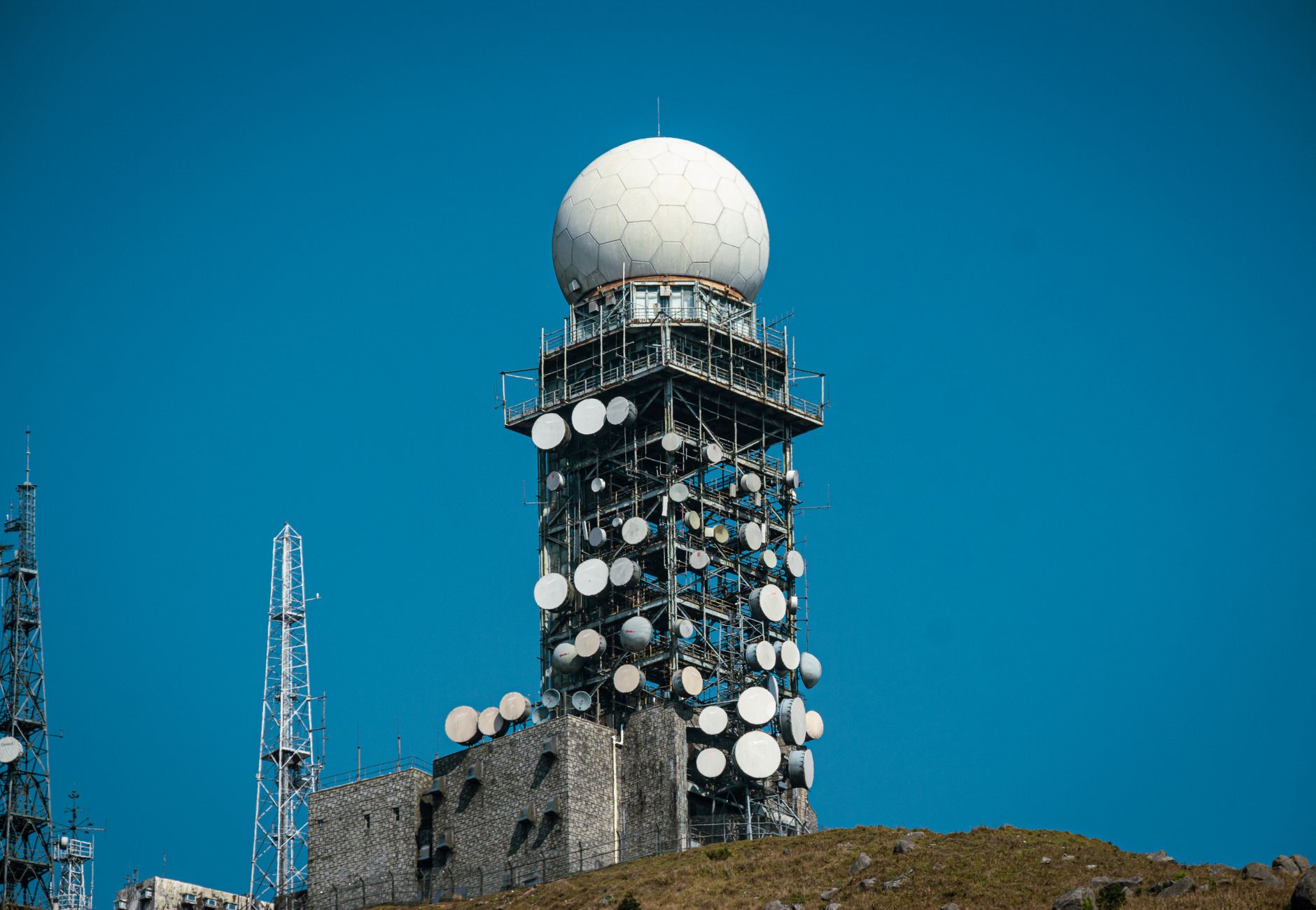 Photo by Shreyaan Vashishtha on Pexels.
That assumption is now wrong.
Software-defined radar (SDR, in its radar-specific sense) is collapsing those boundaries by pushing waveform generation, pulse compression, Doppler processing, and target discrimination into programmable silicon. FPGAs, GPUs, and increasingly, custom AI inference chips sitting right behind the antenna. What used to require a rack of analog hardware now runs as compiled code. Change the mission, change the waveform; change the waveform, change the threat you can detect.
Why does this matter beyond clever engineering? Because the legacy model, where Raytheon or Northrop built a proprietary radar system, locked the signal processing behind classified firmware, and sold upgrades on a decade-long schedule, depended entirely on hardware being the hard part. When the hard part becomes software, the supplier dynamic changes completely. A well-funded startup with a phased-array front end and a smart DSP stack can credibly compete. Several already are.
Companies like Epirus, Cognitive Systems, and a handful of less-publicized defense primes are shipping radar systems where the signal processing chain is almost entirely reconfigurable at runtime. That's not a marketing claim, it's a direct consequence of what modern FPGAs can do. A Xilinx Versal or Intel Agilex device can sustain hundreds of gigaops of DSP throughput while switching processing modes in microseconds. The antenna sees RF; everything behind it is malleable.
Here's what the data path actually looks like in a modern software-defined radar:
graph TD
    A[Phased Array Antenna] --> B(Analog Front End / ADC)
    B --> C{FPGA Signal Processor}
    C --> D[Waveform Generation]
    C --> E[Pulse Compression & Doppler]
    D --> F((Mission Mode Selector))
    E --> F
    F --> G[AI Inference Engine]
    G --> H[/Track & Classify Output/]
Notice where the AI sits: downstream of signal processing, not embedded in the RF chain. That placement is deliberate. Inference engines, whether GPU clusters at a ground station or dedicated NPUs on the platform itself, work on processed detections, not raw samples. Feed them raw RF and you drown them. Give them clean detections and they start doing things no human operator can: correlating micro-Doppler signatures, flagging drone swarms by blade-rotation harmonics, distinguishing a decoy from a reentry vehicle based on radar cross-section variance over milliseconds.
The military implications are uncomfortable for some traditional primes. A software-defined radar doesn't need a new procurement program every time the threat evolves. You push a firmware update. You retrain the classifier. You change the pulse repetition interval profile through a configuration file. That speed of adaptation is exactly what the DoD's JADC2 vision demands, sensors that can be remotely reconfigured to serve a joint battlespace picture rather than a single platform's needs.
There are real limits here, and glossing over them would be dishonest. Waveform agility is not free. Switching between operating modes still demands careful electromagnetic compatibility work; a radar that tries to do everything simultaneously usually does everything poorly. Power and thermal constraints on airborne and maritime platforms bite hard when you're running GPU-class inference at the edge. And classified waveforms mean that even reconfigurable systems often carry hardware security modules that limit how open the software stack can actually be.
Still, the direction is clear. The 70-year monopoly on radar-as-hardware is ending, not because analog physics changed, but because the programmable silicon finally caught up to the problem. What changes next is the industrial base around it: who writes the waveform libraries, who trains the classifiers, who owns the over-the-air update pipeline for a forward-deployed sensing node.
That's not a hardware question anymore. It's a software and intelligence question, which means an entirely different set of companies is about to become very relevant to national defense.
The primes know it. The startups are counting on it.
Get Bits Atoms Brains in your inbox
New posts delivered directly. No spam.
No spam. Unsubscribe anytime.